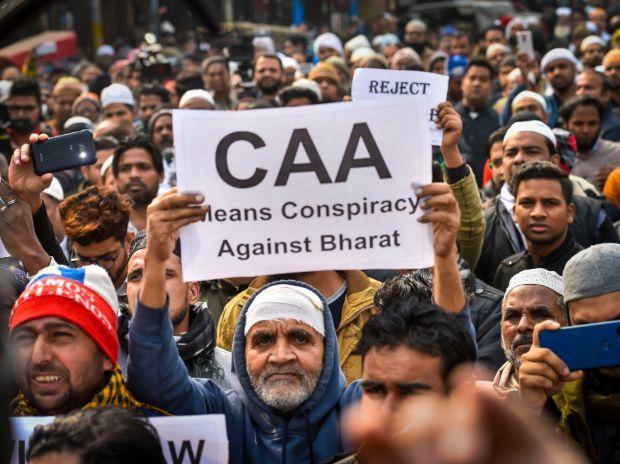
Those who have limited understanding of India’s pluralistic traditions should not attempt to lecture, MEA said after the US expressed concerns over CAA.
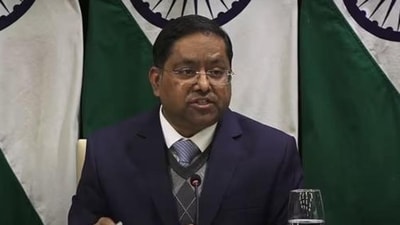
The Citizenship (Amendment) Act 2019 is India’s internal matter and the statement of the United States on its implementation is misplaced, misinformed and unwarranted, ministry of external affairs spokesperson Randhir Jaiswal said. New Delhi asserted its strong position after the US expressed concerns over the notification of the Act. “We are concerned about the notification of the Citizenship (Amendment) Act on March 11. We are closely monitoring how this act will be implemented,” State Department spokesperson Matthew Miller said. “Respect for religious freedom and equal treatment under the law for all communities are fundamental democratic principles,” the State Department spokesperson said.
India’s rebuttal to US concern over CAA: Citizenship (Amendment) Act is about giving citizenship, not about taking it away, MEA said. (HT_PRINT)
Reacting to the concerns of the US, New Delhi made it clear that it does not care about “lectures by those who have a limited understanding of India’s pluralistic traditions…”.
Hindustan Times – your fastest source for breaking news! Read now.
“The act grants a safe haven to persecuted minorities belonging to Hindu, Sikh, Buddhist, Parsi and Christian communities from Afghanistan, Pakistan and Bangladesh who have entered India on or before 31st December 2014. The CAA is about giving citizenship, not about taking away citizenship, so this must be underlined. It addresses the issue of statelessness, provides human dignity, and supports human rights,” the MEA spokesperson said.
India’s constitution guarantees freedom of religion to all its citizens and there is no ground for any concern for minorities, the MEA said. “Vote bank politics should not determine views about a laudable initiative to help those in distress. Lectures by those who have a limited understanding of India’s pluralistic traditions and the region’s post-partition history are best not attempted. Partners and wellwishers of India should welcome the intent with which this step has been taken,” the spokesperson said.
wireless 2mp full hd Best wifi camera under 2000 list below. you cam buy using button check amazon price . you can get Free Discount and get more benifits.
【Ultra 2K Resolution & Advanced Night Vision】Galayou wifi camera with 2K HD resolution provides you a clear and vivid image quality and captures more details on your home anywhere during day and night by using 6X digital Zoom. This indoor security camera has an enhanced night vision with effective distance up to 33 ft . This indoor camera for home security only supports 2.4GHz WiFi. ( 5GHz is not supported )
【24/7 Real-Time Motion Alert & Smart Siren】 The baby camera supports motion detection and push alert to monitor your baby/pet/elder. When your baby is climbing out of the cribs or your pet is scratching the sofa, Galayou baby camera monitor will send alert message on your phone to let you know.
【Remote Monitoring & Two-Way Audio】 Best Wifi Camera Under 2000 in Built-in microphone and speaker allows you to keep in touch with your baby, pet,family by remotely controlling the Wansview Cloud APP when you are out or busy. This WiFi camera for home surveillance also can scare away the unexpected intruder to keep your property safe with audio feature.
【Secure Local Storage & Cloud Storage 】 24/7 continuous recording feature is open to all Galayou customers without extra fees. Glayou indoor camera supports up to 128GB mciro SD card (not included) to store the vidoe clips on local storage. The Cloud storage also is a good option for the user who don’t want to take the risk of losing card and card damaged. All recorded videos will be fully protected and encrypted with AWS Cloud.
【Works with Alexa& Google Home】 The security camera is compatible with Alexa and Google home. Just use the voice command to control these devices to show you the live-feed of camera. The smart integration between the Galayou camera and your device make your home system more intelligent and reliable.
【2K High Definition】Capture every detail inside your home with crystal-clear 2K high definition video with this indoor security camera. Easily see what your baby is holding or what your pet is playing with.
【Up, Down, All Around】This Pan/Tilt IP camera see everything across an entire room or walkway with the 360° horizontal and 114° vertical range pan/tilt field of view.
【Secure Local or Cloud Storage】Best Wifi Camera Under 2000 Save footage continuously on up to a 512 GB microSD card (not included) or subscribe to Tapo Care for cloud storage which saves 30-day video history and provides additional benefits such as Rich Notification, Video Summary and more.
【Detection & Instant Notification】Best Wifi Camera Under 2000 in Get instant push notifications when motion, person or baby crying is detected, there is no additional fee to use it as a baby camera monitor. Discern from notifications that matter, so you’ll know if its your pet playing around or if someone is actually there.
【Works w/ Alexa & Google Assistant】 Best Wifi Camera Under 2000 Fully compatible with Amazon Alexa and Google Assistant, use your simple voice command to view Tapo indoor security camera live stream on Echo Show or Google Chrome Cast with a screen. Easily get your home security footage up on a larger TV display.
𝟐𝐊 𝐒𝐮𝐩𝐞𝐫 𝐂𝐥𝐞𝐚𝐫 𝐕𝐢𝐝𝐞𝐨 & 𝐈𝐦𝐚𝐠𝐞 𝐐𝐮𝐚𝐥𝐢𝐭𝐲: Best Wifi Camera Under 2000 in View every event in 2K super clear image quality so you see exactly what is happening inside your home. Upgraded 3 million pixels, up to 2304 x 1296 resolution, for clarity in every angle.
𝐄𝐧𝐡𝐚𝐧𝐜𝐞𝐝 𝐍𝐢𝐠𝐡𝐭 𝐕𝐢𝐬𝐢𝐨𝐧: Equips with 940-nm infrared lights, a high-sensitivity image sensor and F1.9 large aperture lens, YI 2K home camera captures detailed images even in low-light conditions.
𝐋𝐨𝐜𝐚𝐥 𝐒𝐃 𝐂𝐚𝐫𝐝 𝐚𝐧𝐝 𝐂𝐥𝐨𝐮𝐝 𝐒𝐭𝐨𝐫𝐚𝐠𝐞: Best Wifi Camera Under 2000 Store your data and recordings locally with an extra SD card (not included) or in the cloud. YI Cloud offers loop-recording with no storage limit, so even if your camera is stolen or damaged, your footage will still be secure and accessible on the cloud. 𝗧𝗵𝗲 𝗦𝗗 𝗰𝗮𝗿𝗱 𝗺𝘂𝘀𝘁 𝗯𝗲 𝗳𝗼𝗿𝗺𝗮𝘁𝘁𝗲𝗱 𝘁𝗼 𝗙𝗔𝗧𝟯𝟮 𝗮𝘀 𝘁𝗵𝗲 𝗰𝗮𝗺𝗲𝗿𝗮 𝗱𝗼𝗲𝘀 𝗻𝗼𝘁 𝘀𝘂𝗽𝗽𝗼𝗿𝘁 𝗲𝘅𝗙𝗔𝗧.
𝐒𝐦𝐚𝐫𝐭 𝐀𝐈 𝐃𝐞𝐭𝐞𝐜𝐭𝐢𝐨𝐧: YI cloud storage comes with the latest in Smart AI capabilities, which can accurately distinguish between Person, Vehicle, or Animal, and significantly reduce false alarms (Subscription Needed). It sends real-time alerts to your phone, keeping you informed of any detected activity.
𝗪𝗼𝗿𝗸𝘀 𝐰𝐢𝐭𝐡 𝐀𝐥𝐞𝐱𝐚 𝐚𝐧𝐝 𝐆𝐨𝐨𝐠𝐥𝐞 𝐀𝐬𝐬𝐢𝐬𝐭𝐚𝐧𝐭: Use your voice command to turn on YI camera for home security or view your camera live stream on Echo Show or any screen-based Alexa device or Google Chrome Cast.
【Advanced AI Technology for Instant Alerts】Best Wifi Camera Under 2000 With cutting-edge AI technology, this indoor camera can accurately detect people or pets and send real-time alerts to ensure you never miss a thing.
【Crystal Clear 2K HD Resolution】Experience high-quality 2K FHD video and images with this Wi-Fi home security camera, allowing you to view your loved ones in real-time from anywhere with clarity.
【Real-Time Communication and One-Touch Calling】Best Wifi Camera Under 2000 Stay connected with your family, baby, or pets with the built-in microphone and speaker. The one-touch calling feature makes it easy to communicate no matter where you are.
【Full Room Coverage and Privacy Protection】Enjoy a 360-degree view with a 355° horizontal and 90° vertical field of view. Easily adjust the lens for complete coverage and use the privacy mode for peace of mind when the camera is not in use.
【Secure Storage Options】Keep your recordings safe with local storage on a SD card (up to 128 GB) or utilize the lifetime free 3-day cloud storage. Connect seamlessly with 2.4G Wi-Fi for reliable connectivity (5G not supported).
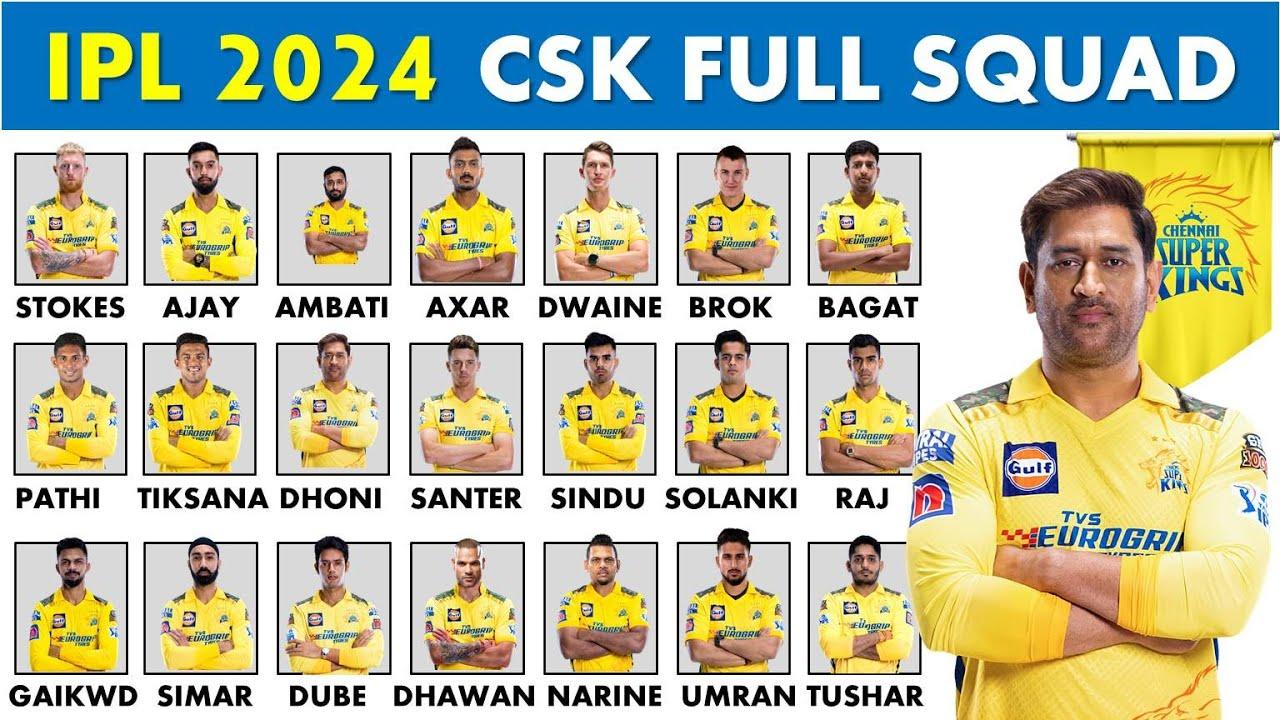
Under Mahendra Singh Dhoni’s captaincy, CSK has won four IPL championships and is the second most successful team in league history. The team paid Rs. 14 crore for Daryl Mitchell at the season 2024 auction. They also brought in Sameer Rizvi (Rs. 8.40 crore), Shardul Thakur (Rs. 4 crore), Mustafizur Rahman (Rs. 2 crore), Avanish Rao Aravelly (Rs. 20 lakh) and Rachin Ravindra (Rs. 1.8 crores), to complete their 25-person lineup.
Pi Day 2024: Know about Invention, History and Interesting Facts, here
Important Days in March 2024: National and International Dates List
Highest Strike Rate in IPL (2008-2024)
Aman Gupta Biography
Birth
16 August 1984
Age
37 years old
Education
Delhi Public School, R.K. Puram
Delhi University
Institute of Chartered Accountants of India
Indian School of Business
Kellogg Graduate School of Management, USA
Family
Neeraj Gupta (Father)
Jyoti Kochar Gupta (Mother)
Occupation
Angel Investor and Investor, Co-founder and CMO boAt
Net Worth
$95 million
Wife
Priya Dagar
Children
Mia Gupta
Adaa Gupta
Aman Gupta Biography: Birth, Age, and Family
Aman Gupta was born on 16 August 1984 in Delhi to Neeraj Gupta (Father) and Jyoti Kochar Gupta (Mother). He is 37 years old.
Aman Gupta Education
Aman Gupta attended Delhi Public School, R.K. Puram and is an alumnus of Delhi University. He later cleared CA entrance and attended the Institute of Chartered Accountants of India.
To realise his dream of becoming an entrepreneur, Aman Gupta pursued an MBA in Finance and Strategy from the Indian School of Business. He did his second MBA in general management and marketing from Kellogg Graduate School of Management, USA.
Aman Gupta Wife and Children
Aman Gupta tied the knot with Priya Dagar and the couple gave birth to two daughters– Mia Gupta and Adaa Gupta.
Also Read | Anupam Mittal Biography: Birth, Age, Family, Education, Career, Net Worth, Shark Tank India, and More
Aman Gupta Career
1- Aman Gupta started his career with Citi as the Assistant Manager from March 2003 to August 2005.
2- He co-founded Advanced Telemedia Pvt. Ltc. and served as its CEO from September 2005 to March 2010.
3- From June 2011 to February 2012, Gupta served as the senior management consultant at KMPG.
4- He was associated with Harman International, a Samsung company, as its India sales director from March 2012 to December 2013.
5- He co-founded Imagine Marketing in April 2014.
6- Sameer Mehta and Aman Gupta co-founded BoAt in January 2016 and is currently serving as its CMO.
Foundation of BoAt
Sameer Mehta and Aman Gupta co-founded boAt, a company that deals in fashionable audio products. For the first two years, the company sold earphones, headphones, speakers, travel chargers and premium rugged cables.
The company’s indestructible Apple charging cable and charger hit the market as the original ones used to bend and break near the ends. The rough, braided cable by boAt having a life cycle of 10,000 bends is priced at Rs. 1,500, much lower than that of the original charger and cable.
Aman Gupta Net Worth
Aman Gupta is an angel investor who has invested in companies including FREECULTR, Bummer, Skippi Ice Pops, Shiprocket, WickedGud, Anveshan, and 10club. His net worth is approximately $95 million.
Aman Gupta as Shark Tank India Judge
Aman Gupta is one of the seven judges on Shark Tank India. The Indian adaption of the American business reality show helps budding entrepreneurs to grow. As part of his role on the show, Gupta will be mentoring and investing in the new business ideas.
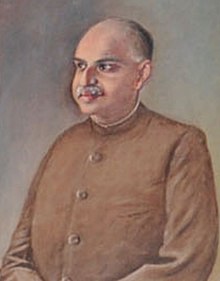
Syama Prasad Mookerjee, founder of the Bharatiya Jana Sangh
Atal Bihari Vajpayee, the first BJP prime minister (1998–2004)
Lal Krishna Advani, deputy Prime Minister under Vajpayee and one of the architects of the Ram Janmabhoomi movement
Main article: Bharatiya Jana Sangh
The BJP’s origins lie in the Bharatiya Jana Sangh, popularly known as the Jana Sangh, founded by Syama Prasad Mukherjee in 1951 in response to the politics of the dominant Congress party. It was founded in collaboration with the Hindu nationalist volunteer organisation, the Rashtriya Swayamsevak Sangh (RSS), and was widely regarded as the political arm of the RSS.[47] The Jana Sangh’s aims included the protection of India’s “Hindu” cultural identity, in addition to countering what it perceived to be the appeasement of Muslim people and the country of Pakistan by the Congress party and then-Prime Minister Jawaharlal Nehru. The RSS loaned several of its leading pracharaks, or full-time workers, to the Jana Sangh to get the new party off the ground. Prominent among these was Deendayal Upadhyaya, who was appointed General Secretary. The Jana Sangh won only three Lok Sabha seats in the first general elections in 1952. It maintained a minor presence in parliament until 1967.[48][49]
The Jana Sangh’s first major campaign, begun in early 1953, centred on a demand for the complete integration of Jammu and Kashmir into India.[50] Mukherjee was arrested in May 1953 for violating orders from the state government restraining him from entering Kashmir. He died of a heart attack the following month, while still in jail.[50] Mauli Chandra Sharma was elected to succeed Mukherjee; however, he was forced out of power by the RSS activists within the party, and the leadership went instead to Upadhyaya. Upadhyay remained the General Secretary until 1967, and worked to build a committed grassroots organisation in the image of the RSS. The party minimised engagement with the public, focusing instead on building its network of propagandists. Upadhyaya also articulated the philosophy of integral humanism, which formed the official doctrine of the party.[51] Younger leaders, such as Atal Bihari Vajpayee and Lal Krishna Advani also became involved with the leadership in this period, with Vajpayee succeeding Upadhyaya as president in 1968. The major themes on the party’s agenda during this period were legislating a uniform civil code, banning cow slaughter and abolishing the special status given to Jammu and Kashmir.[52]
After assembly elections across the country in 1967, the party entered into a coalition with several other parties, including the Swatantra Party and the socialists. It formed governments in various states across the Hindi heartland, including Madhya Pradesh, Bihar and Uttar Pradesh. It was the first time the Jana Sangh held political office, albeit within a coalition; this caused the shelving of the Jana Sangh’s more radical agenda.[53]
Janata Party (1977–80)
Main article: Janata Party
In 1975, Prime Minister Indira Gandhi imposed a state of emergency. The Jana Sangh took part in the widespread protests, with thousands of its members being imprisoned along with other agitators across the country. In 1977, the emergency was withdrawn and general elections were held. The Jana Sangh merged with parties from across the political spectrum, including the Socialist Party, the Congress (O) and the Bharatiya Lok Dal to form the Janata Party, with its main agenda being defeating Indira Gandhi.[49] The Janata Party won a majority in 1977 and formed a government with Morarji Desai as Prime Minister. The former Jana Sangh contributed the largest tally to the Janata Party’s parliamentary contingent, with 93 seats or 31% of its strength. Vajpayee, previously the leader of the Jana Sangh, was appointed the Minister of External Affairs.[54]
The national leadership of the former Jana Sangh consciously renounced its identity, and attempted to integrate with the political culture of the Janata Party, based on Gandhian and Hindu traditionalist principles. Political scientist Christophe Jaffrelot wrote that this proved to be impossible assimilation.[55] The state and local levels of the Jana Sangh remained relatively unchanged, retaining a strong association with the RSS, which did not sit well with the moderate centre-right constituents of the Party.[56] Violence between Hindus and Muslims increased sharply during the years that the Janata Party formed the government, with former Jana Sangha members being implicated in the riots in Aligarh and Jamshedpur in 1978–79. The other major constituents of the Janata Party demanded that the Jana Sangh should break from the RSS, which the Jana Sangh refused to do. Eventually, a fragment of the Janata Party broke off to form the Janata Party (Secular). The Morarji Desai government was reduced to a minority in the Parliament, forcing its resignation. Following a brief period of coalition rule, general elections were held in 1980, in which the Janata Party fared poorly, winning only 31 seats. In April 1980, shortly after the elections, the National Executive Council of the Janata Party banned its members from being ‘dual members’ of party and the RSS. In response, the former Jana Sangh members left to create a new political party, known as the Bharatiya Janata Party.[57][54]
BJP (1980–present)
Formation and early days
Although the newly formed BJP was technically distinct from the Jana Sangh, the bulk of its rank and file were identical to its predecessor, with Vajpayee being its first president.[58] Historian Ramachandra Guha writes that the early 1980s were marked by a wave of violence between Hindus and Muslims. The BJP initially moderated the Hindu nationalist stance of its predecessor the Jana Sangh to gain a wider appeal, emphasising its links to the Janata Party and the ideology of Gandhian Socialism.[59] This was unsuccessful, as it won only two Lok Sabha seats in the elections of 1984.[59] The assassination of Indira Gandhi a few months earlier resulted in a wave of support for the Congress which won a record tally of 403 seats, contributing to the low number for the BJP.[60]
Ram Janmabhoomi movement
Main article: Ram Rath Yatra
Further information: Ayodhya dispute and Demolition of the Babri Masjid
Ram Rath Yatra
The failure of Vajpayee’s moderate strategy led to a shift in the ideology of the party toward a policy of more hardline Hindu nationalism.[59][61] In 1984, Advani was appointed president of the party, and under him it became the political voice of the Ram Janmabhoomi movement. In the early 1980s, the Vishwa Hindu Parishad (VHP) began a campaign for the construction of a temple dedicated to the Hindu deity Rama at the disputed site of the Babri Mosque in Ayodhya. The mosque had been constructed by the Mughal Emperor Babur in 1527. There is a dispute about whether a temple once stood there.[62] The agitation was on the basis of the belief that the site is the birthplace of Rama, and that a temple had been demolished to construct the mosque.[63] The BJP threw its support behind this campaign and made it a part of their election platform. It won 86 Lok Sabha seats in 1989, a tally which made its support crucial to the National Front government of V. P. Singh.[64]
In September 1990, Advani began a rath yatra (chariot journey) to Ayodhya in support of the Ram temple movement. According to Guha, the imagery employed by the yatra was “religious, allusive, militant, masculine, and anti-Muslim”.[65] Advani was placed under preventive detention on the orders of the then Bihar chief minister Lalu Prasad Yadav. A large number of kar sevaks (religious volunteers) nonetheless converged at Ayodhya, and some attacked the mosque. Three days of fighting with the paramilitary forces ended with the deaths of several kar sevaks. Hindus were urged by VHP to “take revenge” for these deaths, resulting in riots against Muslims across Uttar Pradesh. [66] The BJP withdrew its support from the V.P. Singh government, leading to fresh general elections. The BJP further increased its tally to 120 seats, and won a majority in the Uttar Pradesh assembly.[67]
On 6 December 1992, the RSS and its affiliates organised a rally involving more than 100,000 VHP and BJP activists at the site of the mosque.[67] The rally developed into a frenzied attack that ended with the demolition of the mosque.[67] Over the following weeks, waves of violence between Hindus and Muslims erupted all over the country, killing over 2,000 people.[67] The government briefly banned the VHP, and many BJP leaders, including Advani were arrested for making inflammatory speeches provoking the demolition.[68][69] Several historians have said that the demolition was the product of a conspiracy by the Sangh Parivar, and not a spontaneous act.[67] In the parliamentary elections in 1996, the BJP capitalised on the communal polarisation that followed the demolition to win 161 Lok Sabha seats, making it the largest party in parliament.[42] Vajpayee was sworn in as Prime Minister but was unable to attain a majority in the Lok Sabha, forcing the government to resign after 13 days.[42]
A 2009 report, authored by Justice Manmohan Singh Liberhan, found that 68 people were responsible for the demolition, mostly leaders from the BJP.[69] Among those named were Vajpayee, Advani, and Murli Manohar Joshi. The report also criticised Kalyan Singh, Chief Minister of Uttar Pradesh during the demolition.[69] He was accused of posting bureaucrats and police officers who would stay silent during the demolition.[69] In 2020, the Supreme Court of India acquitted all of the accused in the demolition including Advani and Joshi.[70]
Vajpayee era (1998, 1999–2004)
Further information: National Democratic Alliance
A coalition of regional parties formed the government in 1996, but this grouping was short-lived, and mid-term polls were held in 1998. The BJP contested the elections leading a coalition called the National Democratic Alliance (NDA), which contained its existing allies like the Samata Party, the Shiromani Akali Dal, the Shiv Sena in addition to the All India Anna Dravida Munnetra Kazhagam (AIADMK) and the Biju Janata Dal. Among these regional parties, the Shiv Sena was the only one that had an ideology similar to the BJP; Amartya Sen, for example, called the coalition an “ad hoc” grouping.[71] The NDA had a majority with outside support from the Telugu Desam Party (TDP) and Vajpayee returned as Prime Minister.[72] However, the coalition ruptured in May 1999 when the leader of AIADMK, J. Jayalalitha, withdrew her support, and fresh elections were held again.[73]
On 13 October 1999, without the AIADMK, the NDA won 303 seats in parliament and thus an outright majority. The BJP had its highest-ever tally of 183. Vajpayee became Prime Minister for the third time; Advani became Deputy Prime Minister[a] and Home Minister. This NDA government lasted its full term of five years. Its policy agenda included a more aggressive stance on defence and terror and neo-liberal economic policies.[43] In 2001, Bangaru Laxman, then the BJP president, was filmed accepting a bribe in a sting operation.[74][75] He was compelled to resign and was subsequently prosecuted, eventually being sentenced to four years in prison.[76]
2002 Gujarat violence
Main article: 2002 Gujarat violence
On 27 February 2002, a train carrying Hindu pilgrims was burned outside the town of Godhra, killing 59 people. The incident was seen as an attack upon Hindus, and sparked off massive anti-Muslim violence across the state of Gujarat that lasted several weeks.[77] The death toll estimated was as high as 2000, while 150,000 were displaced.[78] Rape, mutilation, and torture were also widespread.[78][79] The then-Gujarat chief minister Narendra Modi and several high-ranking government officials were accused of initiating and condoning the violence, as were police officers who allegedly directed the rioters and gave them lists of Muslim-owned properties.[80] In April 2009, a Special Investigation Team (SIT) was appointed by the Supreme Court to investigate and expedite the Gujarat riots cases. In 2012, Modi was cleared of complicity in the violence by the SIT. BJP MLA Maya Kodnani, who later held a cabinet portfolio in the Modi government, was convicted of having orchestrated one of the riots and sentenced to 28 years imprisonment;[81][82] she was later acquitted by the Gujarat High Court.[83] Scholars such as Paul Brass, Martha Nussbaum and Dipankar Gupta have said that there was a high level of state complicity in the incidents.[84][85][86]
In opposition (2004–2014)
Vajpayee called for early elections in 2004, six months ahead of schedule. The NDA’s campaign was based on the slogan “India Shining”, which sought to depict it as responsible for a rapid economic transformation of the country.[87] However, the NDA unexpectedly suffered a heavy defeat, winning only 186 seats in the Lok Sabha, compared to the 222 of the Congress and its allies. Manmohan Singh succeeded Vajpayee as Prime Minister as the head of the United Progressive Alliance. The NDA’s failure to reach out to rural Indians was provided as an explanation for its defeat, as was its divisive policy agenda.[87][88]
In May 2008, the BJP won the state elections in Karnataka. This was the first time that the party won assembly elections in any South Indian state. In the 2009 general elections, its strength in the Lok Sabha was reduced to 116 seats. It lost the Karnataka assembly election in 2013.[89]
Modi era (2014–present)
Main article: Premiership of Narendra Modi
Narendra Modi, Prime Minister of India since 2014
Amit Shah has been the longest (continuous) serving National President of the BJP
In the 2014 Indian general election, the BJP won 282 seats, leading the NDA to a tally of 336 seats in the 543-seat Lok Sabha.[90] Narendra Modi was sworn in as the 14th Prime Minister of India on 26 May 2014.[91][92] The vote share of the BJP was 31% of all votes cast, a low figure relative to the number of seats it won.[93] This was the first instance since 1984 of a single party achieving an outright majority in the Indian Parliament[94] and the first time that it achieved a majority in the Lok Sabha on its own strength. Support was concentrated in the Hindi-speaking belt in North-central India.[93] The magnitude of the victory was not predicted by most opinion and exit polls.[93]
Political analysts have suggested several reasons for this victory, including the popularity of Modi, and the loss of support for the Congress due to the corruption scandals in its previous term.[95] The BJP was also able to expand its traditionally upper-caste, upper-class support base and received significant support from middle-class and Dalit people, as well as among Other Backward Classes.[96][93] Its support among Muslims remained low; only 8% of Muslim voters voted for the BJP.[96][93] The BJP was also very successful at mobilizing its supporters and raising voter turnout among them.[93]
After winning the election, the organisation of the BJP became more centralised with Modi at the helm.[97] People loyal to Modi were rewarded leadership positions across various states within India.[98] Amit Shah, a close confidant of Modi, was appointed as the president of the BJP in 2014.[99] Contextually, many veteran leaders of the party like Lal Krishna Advani, Murli Manohar Joshi, and Jaswant Singh amongst others were allegedly sidelined.[100]
In 2016, the BJP joined the International Democratic Union, a grouping of various centre-right and right-wing political parties across the globe.[101] However, in 2024, the party was removed from the membership of the grouping.[102]
From 2014 onward, BJP witnessed drastic growth in plenty of states. The part won for the first time in the state legislative election of Assam in 2016. Apart from this, one of the most significant gains for the party was in Uttar Pradesh, the largest state in India by population. The BJP won the legislative assembly elections in 2017 with a landslide margin. Likewise, the party also made significant inroads in other North-eastern states.[103]
In 2019, the BJP won the general election with a renewed majority. Soon after returning to power, on 5 August 2019, the Modi administration revoked the special status, or limited autonomy, granted under Article 370 of the Indian Constitution to Jammu and Kashmir—a region administered by India as a state. This state consists of the larger part of Kashmir which has been the subject of a dispute among India, Pakistan, and China since 1947.[104][105]
Later in 2019, the Modi administration introduced the Citizenship (Amendment) Act, 2019, which was passed by the Parliament of India on 11 December 2019. It amended the Citizenship Act, 1955 by providing a path to Indian citizenship for illegal immigrants of Hindu, Sikh, Buddhist, Jain, Parsi, or Christian religion, who had fled persecution from Pakistan, Bangladesh and Afghanistan before December 2014.[106][107] Muslims from those countries were not given such eligibility.[108] The act was the first time religion had been overtly used as a criterion for citizenship under Indian law.[108][b][c][d] A report by the V-Dem Institute described India as experiencing democratic backsliding due to the Modi era,[45][46] which is considered the most notable challenge to India’s democracy since the authoritarian Emergency years of 1975–77.[109][110]
Holi is said to have been celebrated for centuries, but over time, the purpose of the festival has evolved. In its infancy, the Holi festival was supposedly a ceremony for married women to bestow well-being and prosperity on their new family and married life.
Now, one of the primary themes of Holi is the triumph of good over evil. This takes root from the story of Hiranyakashipu, a king who believed he was immortal and should be worshipped as such. His son, Prahlad, was a devoted worshipper of Vishnu, a Hindu deity, and it displeased Hiranyakashipu that his own son would worship Vishnu over him. As the story goes, Lord Vishnu appeared in the form of a half-lion, half-man and killed Hiranyakashipu, and thus, good triumphed over evil.
The other story often associated with Holi is the story of Krishna and Radha. Krishna is always depicted with blue skin — his skin turned blue as a baby when he drank poisonous milk from a demon, according to Hindu legend. Krishna fell in love with Radha, but was worried that Radha would not feel the same way because of his skin. Radha let Krishna apply color to her skin, and they became a couple. And so on Holi, we apply color to each other’s skin.
When is Holi?
Holi always falls on the full moon that occurs during Phalguna, a month in the Hindu calendar that corresponds with late February and early March in the Gregorian calendar. The eve of the festival, Holika Dahan, is when the customary puja and bonfire is held, and the following day — Purnima or Rangwali Holi — is when the full festival of colors occurs. (That’s the day filled with color throwing, water gun spraying, and dancing in the streets.) In 2024, Holi falls on March 24 and 25. Dates for the next few years after that can be found
What is Holi?
Holi is a Hindu festival that takes place every spring. It’s all about new beginnings — Holi welcomes the spring season and celebrates the end of winter. The Holi festival always falls on Purnima, or the day of the full moon. It’s a two-day holiday; the day before the full moon is Holika Dahan. That’s when a bonfire is lit for a puja (or prayer). The bonfire is cleansing and meant to burn away all the bad and evil. The next day, directly after the full moon, is all about the festival of colors.